Lost and Found: LGBTQIA+ Identity and Space in South Florida, guest curated by Palm Beach Post Notables editor Krystian von Speidel, explores how queer life in Palm Beach County has been represented, debated, and ultimately reclaimed through community-building and shared space. Drawing from historic newspapers, archival materials, and contemporary photography, the exhibition examines the role media once played in shaping public perceptions of LGBTQIA+ individuals, often framing queer identity through controversy, morality, and exclusion.

A Word From Our Guest Curator
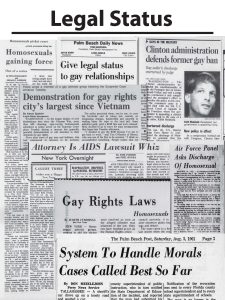
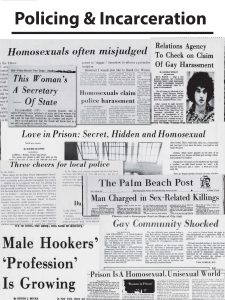
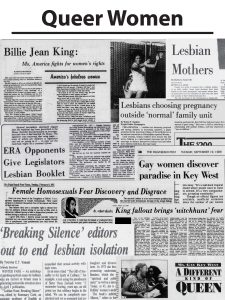
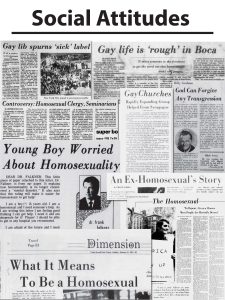
In reviewing 100 years of articles and headlines that appeared in the Palm Beach Post, Palm Beach Daily News and the now-defunct Boca Raton News, I was struck at the similarity between stories about the queer community that proliferated more than 50 years ago and those that appear in today’s press.
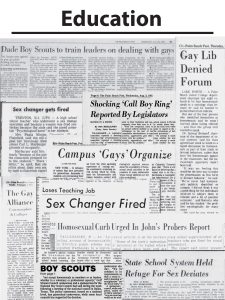
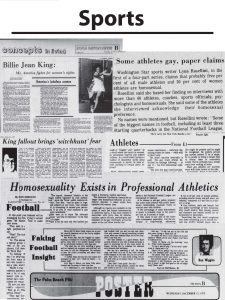
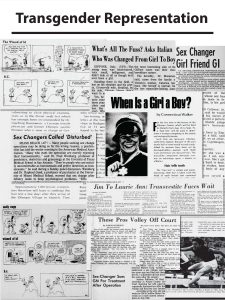
The struggle for queer visibility and equality is one of two steps forward, three steps back. Stories of “deviates” in public schools, teacher firings and fear and misunderstanding of transgender athletes in sports as are as contemporary today as they were in articles that began to appear in the late 1950s and 1960s.
One of the most incredible findings is a cartoon that appeared in the Feb. 10, 1925 edition of The Palm Beach Post. Arguably one of the earliest depictions of gay men in local media, it shows stereotypical mustachioed dandies in an array of lavender getups. Lavender had become a fashionable color for women. However, it had also quickly become a derogatory label widely used to describe gay men. “Lavender boy” was a common slang term used to label or target suspected gay men. Readers of The Palm Beach Post in 1925 would have been aware of the inferences to effeminacy and suggested cross-dressing depicted in the cartoon.
Yet what is most incredible is that it also portends the gay rights movement in the 1970s following the Stonewall Riots in a panel showing an elderly man reminiscing on having worn “Lavender and old lace” in 1925 … in 1975. The author of the 1925 cartoon couldn’t possibly have imagined how much would change in the 50 years that followed.
Tallahassee’s desire to root out a “gay agenda” in public schools isn’t so new if seen through the prism of history.
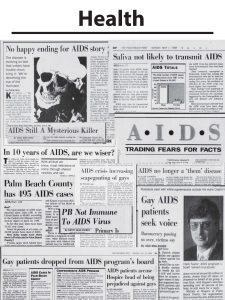
The growing visibility and increasingly sympathetic depictions of queer people in public institutions that newspapers had started to document in the 1970s was short-lived and the media instead turned its focus to the fear spread by a “gay cancer” in the 1980s, with Florida one of the earliest and hardest-hit states by the AIDS crisis. Articles sought to address misconceptions and misinformation while reporting on the numbers of victims.
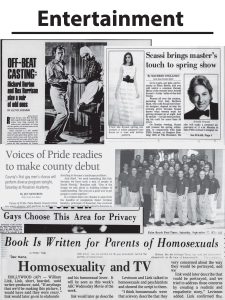
The local media landscape has evolved and stories about queer people in the military and sports, crime coverage of call boy rings and hustlers murdering wealthy men on Palm Beach, or the AIDS crisis no longer proliferate headlines. Regrettably, many of the same headlines depicting the struggle for queer equality and visibility ring true today as much as they did so many years ago.
An Aug. 8, 1986 front-page headline from The Palm Beach Daily News announcing “PB Not Immune to AIDS Virus”—following the report of three deaths and two individuals living with the disease on the island may easily be overlooked—but shows that even the storied island’s gates and hedgerows couldn’t stop the assault of what had been called a “gay plague” only three years earlier from sweeping across the region.”